




From Potholes to Palestine: Gaza Enters Ottawa’s Mayoral Race
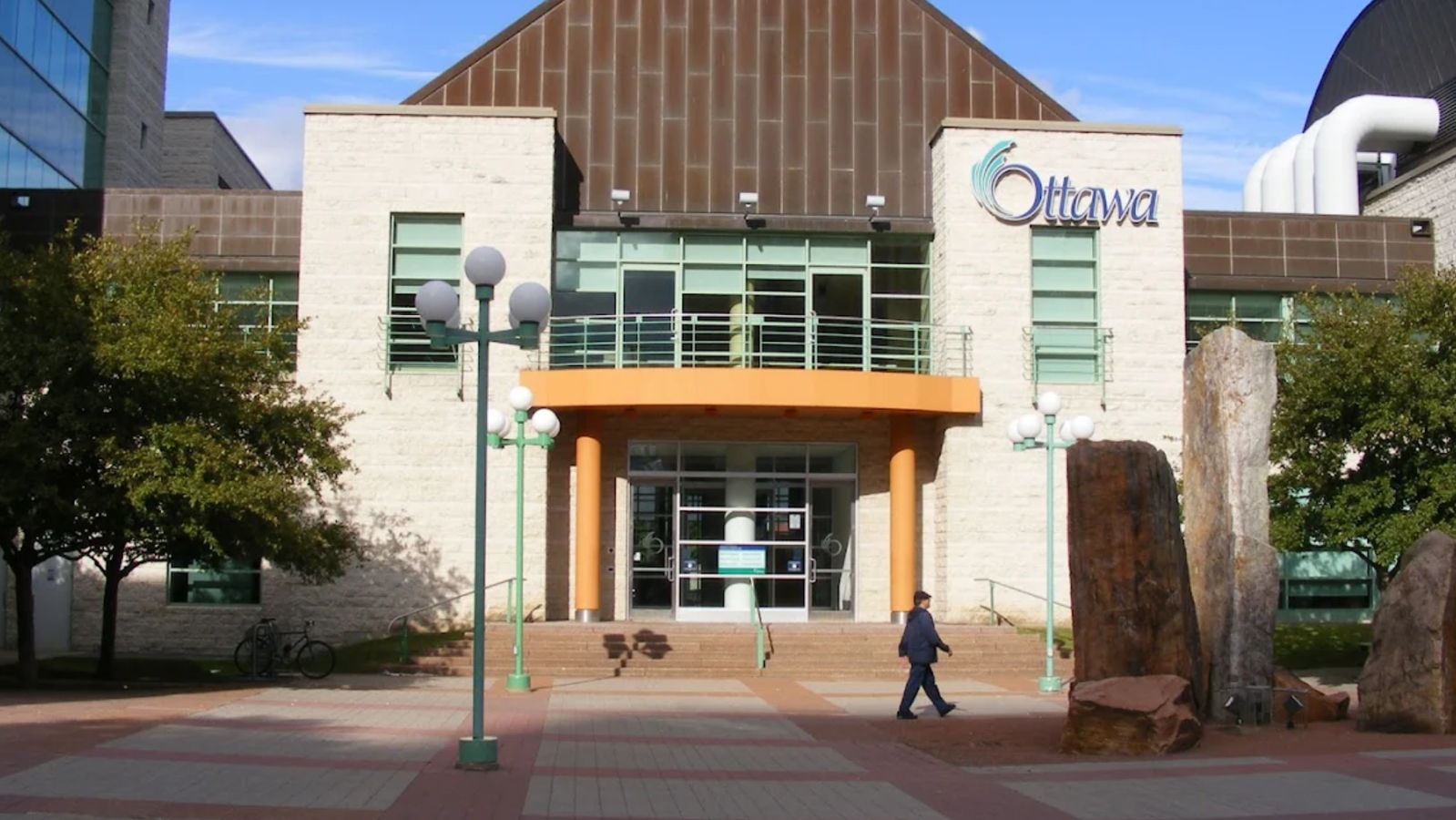
What should a mayoral election be about — roads, taxes and public safety, or the war in Gaza?
That question is emerging in Ottawa’s 2026 mayoral campaign after candidate Neil Saravanamuttoo promised that, if elected this October, he would raise the Palestinian flag at City Hall and publicly declared that he considers Israel’s conduct in Gaza to be genocide.
“As mayor, I will stand with those in our community who are suffering the grief of loss, the anguish of injustice,” Saravanamuttoo said in a video posted Friday. “That’s why, as mayor, I will raise the Palestinian flag at City Hall, as we do for other states.”
Speaking with CTV News, Saravanamuttoo went further.
“I have been prepared to stand up and say that Gaza is a genocide,” he said, pointing to the findings of the UN Independent International Commission of Inquiry.
The commission concluded in September 2025 that Israel had committed genocide in Gaza, a finding Israel rejected as “distorted and false.” The commission’s finding is distinct from a final judgment by the International Court of Justice.
Why Gaza in a Municipal Election?
Saravanamuttoo acknowledged that foreign policy falls outside the direct jurisdiction of an Ottawa mayor. But he argued that voters nevertheless want to know where candidates stand on major national and international controversies.
“People want to know as mayor where I stand, and I think people want to know because they want to know what your values are and whether your values align with their values,” he told CTV News.
That explanation raises a broader question increasingly relevant to municipal politics: How much should a mayor concern himself with issues over which City Hall has no direct jurisdiction?
Another candidate, Alex Lawson, offered a markedly different answer.
Lawson said the only flags that should fly at Ottawa City Hall are those of Ottawa, Ontario and Canada.
“The monstrosities being committed across the world should not be used to try to get votes in a municipal election,” Lawson told CTV News. “We need to stay united in our communities.”
Incumbent Mayor Mark Sutcliffe, who is seeking re-election, largely avoided entering the dispute. His campaign instead emphasized the bread-and-butter responsibilities traditionally associated with municipal government.
“Mayor Sutcliffe remains focused on the job he was elected to do: governing the City of Ottawa responsibly by keeping taxes low while investing strongly in residents’ priorities — roads, infrastructure, transit, and public safety,” his campaign said.
The Flag Question Is More Complicated Than It Sounds
There is, however, an important wrinkle in Saravanamuttoo’s proposal.
Ottawa has a policy of flying the flag of nations with which Canada maintains diplomatic relations on their national days. Canada formally recognized the State of Palestine on September 21, 2025.
Saravanamuttoo argues that raising the Palestinian flag would not require a special exception, pointing to Ottawa’s existing policy of flying the flags of countries with which Canada maintains diplomatic relations on their national days.
“It’s something we do with any country that we recognize,” he said. “We should be raising the flag of Palestine the way that we do of any other country.”
Toronto has already taken that step. The Palestinian flag was raised at Toronto City Hall for the first time on November 17, 2025, following Canada’s recognition of Palestinian statehood.
That means the controversy surrounding Saravanamuttoo is about more than the flag itself. It is also about his decision to make Gaza and his accusation of genocide part of his pitch to voters in a municipal election.
What Is a Mayor For?
Municipal politicians have increasingly found themselves weighing in on conflicts thousands of kilometres from the cities they were elected to govern.
Supporters of such statements argue that mayors are civic leaders as well as administrators. When international events deeply affect residents at home, they contend, communities reasonably expect their elected representatives to speak out.
Critics see something very different: the importing of divisive international conflicts into City Hall, where elected officials have no ability to conduct foreign policy but plenty of responsibility for garbage collection, policing, housing, transit, infrastructure and property taxes.
Ottawa voters are now being offered versions of both arguments.
Saravanamuttoo says residents deserve to know a prospective mayor’s values, even when the issue falls outside municipal jurisdiction.
Lawson says international tragedies shouldn't be used to win votes in a municipal campaign.
And Sutcliffe appears determined to keep the conversation closer to home: taxes, roads, infrastructure, transit and public safety.
With Ottawa residents heading to the polls on October 26, the debate presents a question that extends well beyond the capital — and one Toronto residents may recognize from their own City Hall:
When you vote for a mayor, are you choosing a voice on the world's conflicts — or someone to run your city?