






Jesse Brown Reflects on Toronto’s Antisemitism Mayoral Debate — and What Comes Next
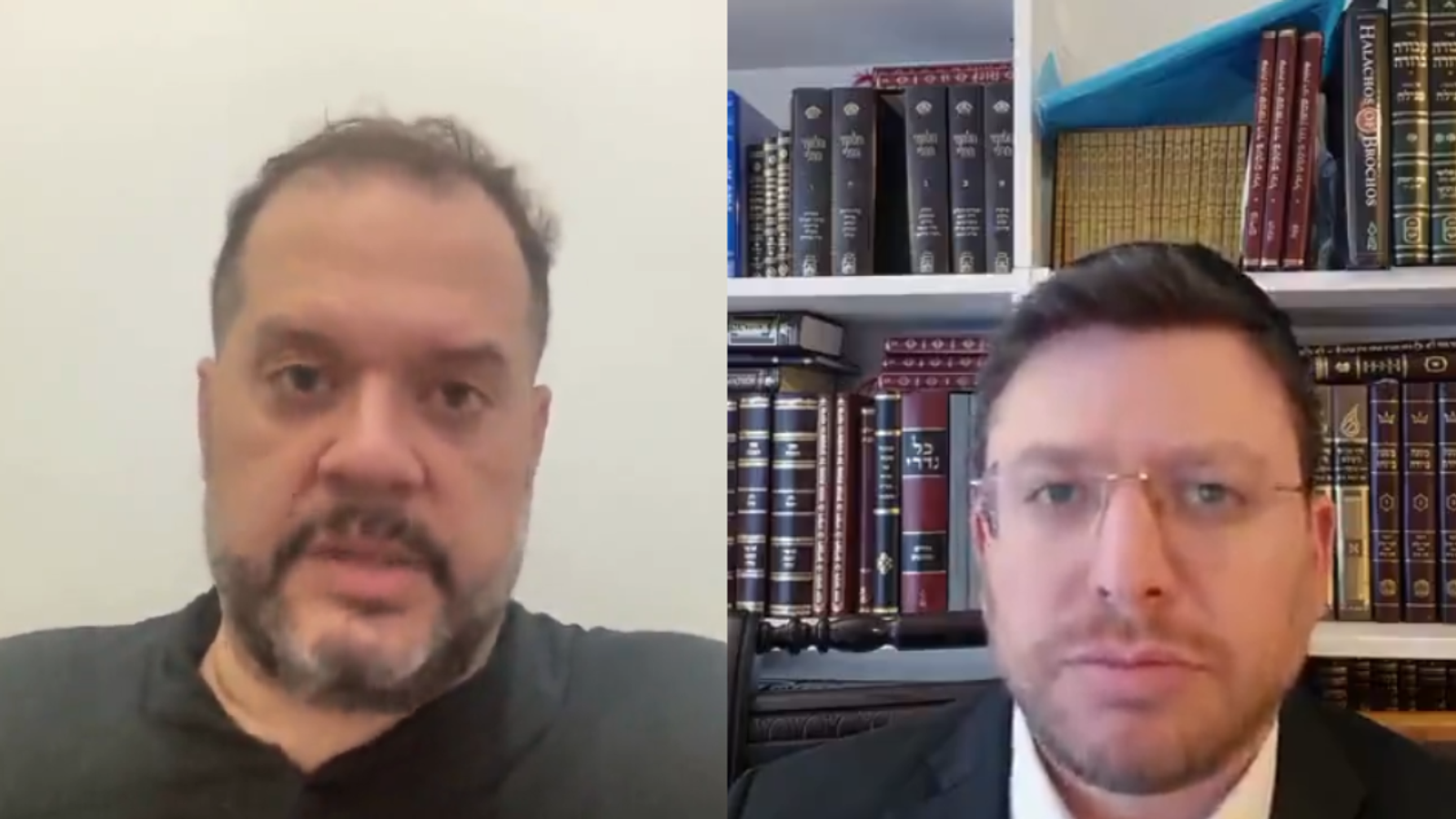


TORONTO — Following Tuesday night’s mayoral debate focused on antisemitism and Jewish safety in Toronto, The Toronto Scoop spoke with Canadaland journalist Jesse Brown, who moderated the event, about what stood out to him after hearing directly from candidates Brad Bradford and Chris Alexander.
The debate, organized and hosted by Jewish Lawyers of Ontario at Adath Israel Congregation, drew a large crowd amid heightened concern over antisemitism and public safety in Toronto.
For many in our community who did not attend Tuesday night’s event, The Toronto Scoop asked Brown to take us inside the room and explain what, if anything, he learned about the candidates and their approaches to the issue.
Alexander: I Would Consider Bowing Out
Perhaps the most concrete piece of new information to emerge, Brown said, came when he pressed Chris Alexander about the possibility that his candidacy could split the anti-Chow vote.
Brown asked Alexander whether, given his stated concerns regarding Jewish safety under Mayor Olivia Chow, he would bow out of the race if his own chances of winning failed to improve and it became apparent that his candidacy could hurt Bradford.
Alexander indicated that he would.
Brown noted that Alexander pushed back on the characterization of himself as a “spoiler,” arguing that his candidacy was energizing the election and forcing issues such as antisemitism and public safety higher onto the political agenda.
Brown called Alexander’s response “a really interesting piece of information for voters in Toronto.”
An Energized Room — and Anger Over Chow’s Absence
Beyond policy, Brown said one of his biggest takeaways was simply the atmosphere.
He estimated that approximately 1,000 people attended and described an almost unanimous sense of displeasure over Chow’s decision not to participate.
“I think it was perceived as a snub," Brown told The Toronto Scoop, adding that the crowd appeared energized and politically mobilized.
Bradford and Alexander: More Similar Than Different
When it came to the candidates’ actual proposals for combating antisemitism, Brown said there was surprisingly little daylight between Bradford and Alexander.
Both emphasized greater use of existing laws and enforcement mechanisms against unlawful conduct at demonstrations, including provisions dealing with mischief, harassment and unlawful assembly.
Bradford also emphasized the mayor’s potential influence over policing, pointing to previous Toronto mayors who took a seat on the Toronto Police Services Board — something Chow has not done.
But Brown cautioned that a mayor cannot simply order police officers around.
“The police don't really answer to the mayor in this direct way,” he explained.
Instead, he said, the mayor’s influence can come through coordination, public leadership and the ability to establish a clear tone for the city.
The Power of the Mayor’s Voice
That less tangible power became one of the central themes of Brown’s reflections.
Brown argued that a mayor’s public statements can influence both the broader public atmosphere and, indirectly, the way institutions respond.
He sharply criticized what he sees as mixed messaging from Chow, contrasting her decision to avoid certain Jewish or Israel-related events on the grounds that they are divisive with her willingness to publicly refer to Israel's actions in Gaza as a 'Genocide.'
Brown stressed that these were his own impressions, rather than a paraphrase of either candidate.
He argued that protesters who repeatedly demonstrate in Jewish neighbourhoods can interpret political ambiguity as tacit approval — while police officers themselves also take cues from the broader political climate.
Brown was particularly critical of Toronto Police’s reliance on de-escalation tactics when dealing with some demonstrations, saying the approach has at times resulted in Jewish residents being restricted while protesters return repeatedly to their neighbourhoods.
What Toronto has not heard forcefully enough from its leadership, he argued, is a simple message: “This stops here. This is not okay.”
Brown said generic declarations that “antisemitism has no home in Canada” provide little comfort to Jews who experience antisemitic activity close to their actual homes.
“Votes in the Mob”
One of the evening’s most memorable lines, according to Brown, came not from either mayoral candidate but from Councillor James Pasternak.
Pasternak said that certain elected officials see “votes in the mob.”
Brown interpreted the remark as a thinly veiled criticism of Chow — suggesting that some politicians may be reluctant to confront aggressive anti-Israel demonstrations because they fear alienating voters.
For antisemitism to be effectively confronted, Brown argued, political leaders need to be willing to clearly identify unacceptable conduct even when doing so carries a political cost.
Brown to Jewish Community: Start by Mobilizing Ourselves
The Toronto Scoop also asked Brown a broader question: Given the relatively small size of Toronto’s Jewish population, how can the community build coalitions capable of wielding greater political influence?
Brown stressed that he is a journalist, not an activist or community organizer, but offered an observation based on the events he has attended.
Before worrying about mobilizing other communities, he suggested, Toronto Jews may need to do a better job mobilizing themselves.
Brown said that at many Jewish events dealing with antisemitism and political advocacy, he sees an overwhelmingly older crowd.
“I’m not seeing Jews under forty,” he said. “I’m not seeing that many Jews under fifty.”
And, particularly relevant to The Toronto Scoop’s readership, Brown added that he rarely sees significant participation from Orthodox and more traditional Jewish communities.
“I’m not seeing Jews from Orthodox or ultra-Orthodox communities very often,” he said.
Brown also pointed to divisions among Jewish organizations over how best to respond to the current climate.
“The Jewish community — it’s getting more galvanized,” Brown said, but added that many people still appear to believe the issue may not affect them personally.
“Maybe there’s gotta be some internal reflection there,” he said.
Brown also pointed to the hundreds of thousands of Torontonians who marched in support of regime change in Iran a few months ago as potential allies in helping the Jewish community mobilize for a safer Toronto.
For a debate ostensibly about what Toronto’s next mayor should do about antisemitism, Brown’s reflections ultimately raised another question as well: what Toronto’s Jewish community itself intends to do as it heads toward election day.
Watch our conversation at https://youtu.be/KKIgSo1P69M?si=FUnj37fuYmJJOMcR