





2,000-year-old Mikveh Reveals Previously Unknown Jewish Settlement in Southern Israel
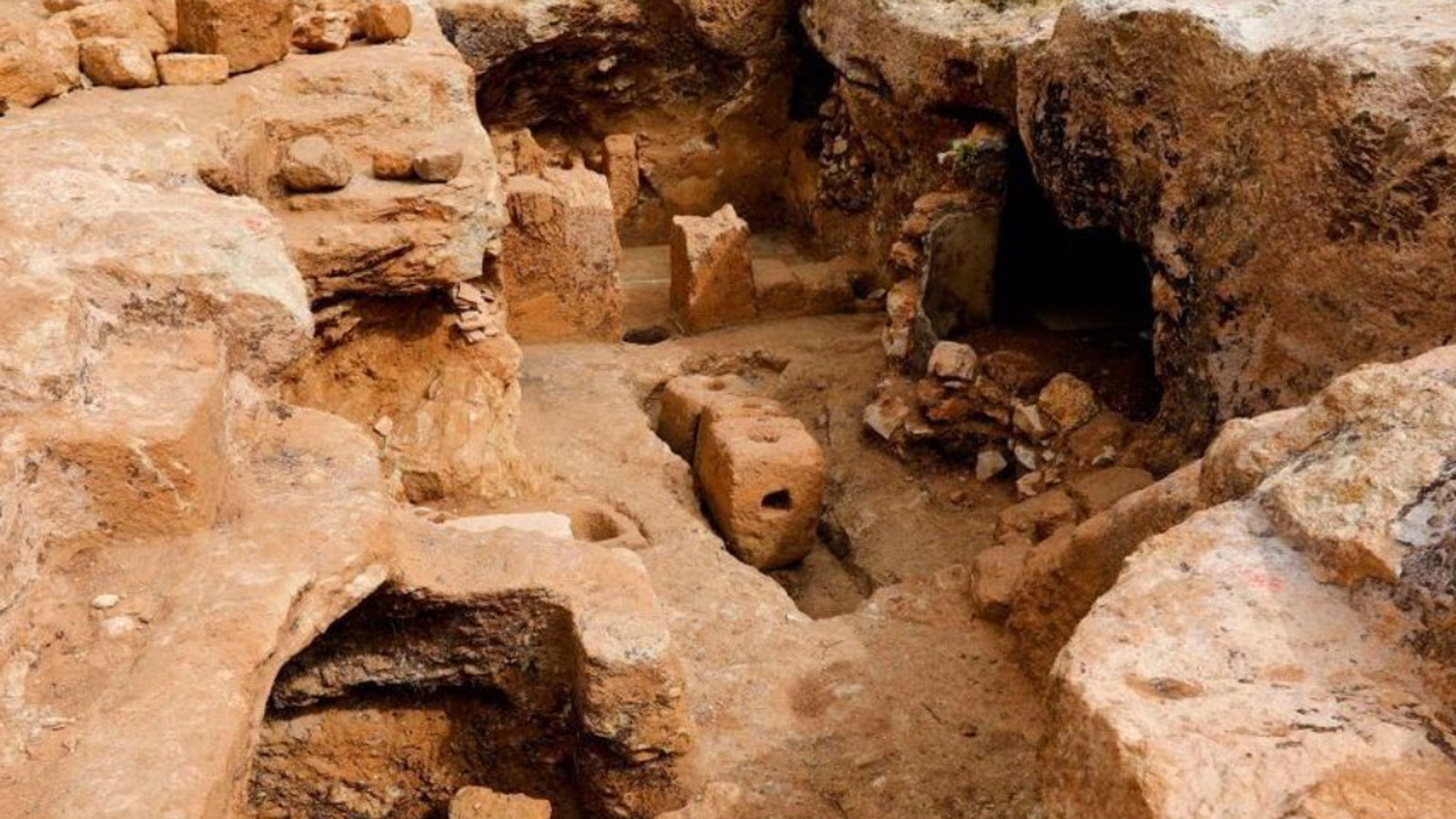


A massive 25-ton mikveh discovered in Kiryat Gat has provided archaeologists with evidence of a Jewish community that was previously unknown to researchers.
A remarkable archaeological discovery in southern Israel is shedding new light on the extent of Jewish settlement in Eretz Yisroel some 2,000 years ago.
The Israel Antiquities Authority has revealed the discovery of an approximately 2,000-year-old mikveh in the Carmei Gat neighborhood of Kiryat Gat. The ancient structure, weighing approximately 25 tons and measuring about four metres across, was uncovered during archaeological excavations ahead of construction in the rapidly developing neighborhood.
But it is what the mikveh revealed about the people who lived there that has archaeologists particularly excited.
A Jewish Community Previously Unknown to Researchers
According to excavation directors Elena Kogan-Zahavi, Maayan Margulis and Shira Lifshitz, this is the first known Jewish settlement from the period discovered in the region between the Judean Lowlands and the northern Negev.
Numerous Jewish communities from the Roman period have been identified in the Judean Lowlands, but archaeologists had not previously known of a Jewish settlement in this particular geographic area.
The mikveh was not the only evidence.
Archaeologists also uncovered stone measuring vessels at the settlement. Stone vessels were particularly common among Jews during the Second Temple period because, according to halachah, stone does not become tamei.
Together, the mikveh and stone vessels provide striking physical evidence of a Jewish community observing the laws of taharah at the site approximately two millennia ago.
Apparently Abandoned During Bar Kokhba Revolt
Evidence uncovered during the excavation suggests that the Jewish settlement was eventually abandoned around the time of the Bar Kokhba revolt against Rome in the second century CE.
The site apparently remained abandoned for roughly 500 years before settlement resumed during the Byzantine period — this time with a different population.
Moving a 25-Ton Mikveh
With modern construction advancing around the archaeological site, the IAA faced an unusual challenge: how to move an entire ancient mikveh without destroying it.
Four conservation specialists spent approximately two weeks excavating around the structure. Workers then drilled beneath it and inserted steel beams to support the ancient installation.
Its original plaster was covered with gauze and adhesives and the structure reinforced with foam to protect it against vibrations.
A massive crane with a lifting capacity of 300 tons was then brought in to hoist the approximately 25-ton mikveh from the ground in one piece.
Its four-metre width required special transportation, including a road closure and escort vehicles.
“Once you lift up a structure like this, there is no going back,” said senior IAA conservator Eyal Kaho, who led the operation. “If it falls apart, we’ve lost the mikveh.”
Ancient Jewish Life Returning to the Neighborhood
The mikveh has now been transferred for safekeeping to the Israel Antiquities Authority's National Treasures facility at Beit Guvrin.
But that won't be its permanent home.
Once development of Carmei Gat is completed, authorities plan to bring the entire ancient mikveh back and incorporate it into a public open space in the new neighborhood.
The result will be an unusual meeting of ancient and modern Jewish settlement: residents of a newly built Israeli neighborhood living alongside physical evidence of another Jewish community that occupied the area approximately 2,000 years earlier.