





France Rocked by Violent Unrest: Nearly 6,900 Arrested as Trump Blames Mass Immigration
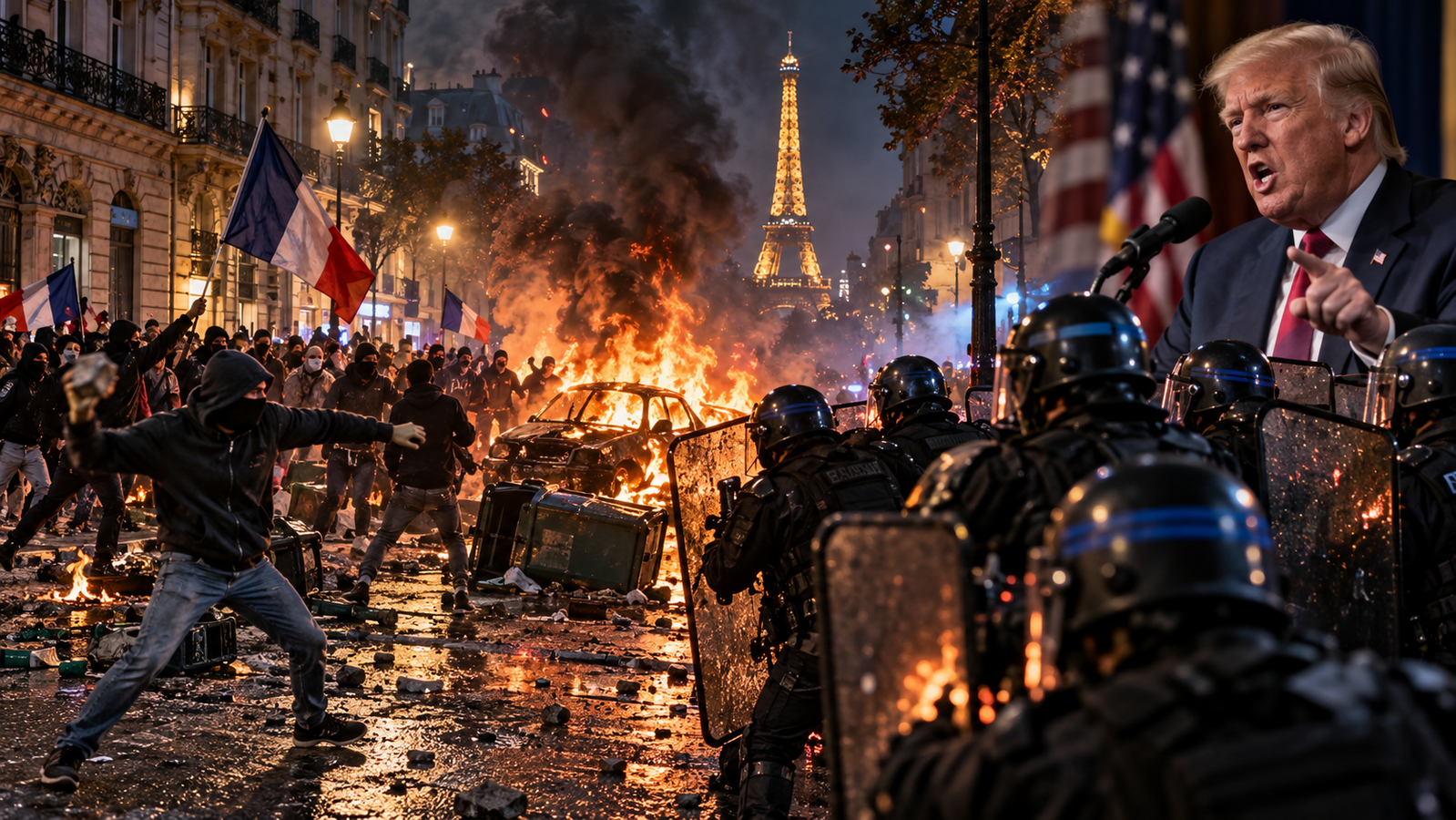


France is facing weeks of widespread unrest, with burning barricades, violent clashes with police, damaged schools, and nearly 6,900 arrests — most involving minors.
What began September 21 as student protests over teacher shortages, overcrowded classrooms, and deteriorating school conditions has escalated into a national crisis, drawing international attention and prompting U.S. President Donald Trump to blame mass immigration and Islam.
On October 6, approximately 266,000 people demonstrated nationwide. Another 71,500 took to the streets Thursday, October 8, including 24,500 in Paris. While most demonstrations have remained peaceful, some have descended into arson, vandalism, and violent confrontations with police.
Trump: "This Isn't About Schools"
President Trump weighed in Tuesday on Truth Social, offering a sharply different explanation for the unrest.
"What's happening in France is nothing less than out of control mass migration. This isn't about schools, this is about Islam wanting to take over a once great Country!"
His remarks reignited longstanding debates over immigration, integration, and national identity in Europe.
France has struggled for decades with tensions surrounding immigration, secularism, and social integration, particularly in economically disadvantaged suburbs.
However, the current demonstrations originated over education-related grievances, and no evidence has emerged establishing that immigration or Islamist objectives are driving the movement.
Nearly 6,900 Arrests, Hundreds Injured
According to the latest figures reported by Reuters, French authorities have arrested 6,877 people since the protests began, the overwhelming majority minors.
Approximately 700 police officers and 200 students have been injured, while more than 100 education employees have also reportedly suffered injuries.
Several teenagers have sustained particularly serious injuries, including a 15-year-old who lost a hand, apparently after encountering a police stun grenade.
In another incident, a 14-year-old suffered a shattered jaw and multiple broken teeth after being struck by a police tear-gas projectile.
France's internal police watchdog is investigating 24 cases of alleged police misconduct, as human rights organizations accuse authorities of excessive force.
Police officials, meanwhile, maintain that their response is necessary to contain violence, protect schools, and restore public order.
Government Makes Concessions
Facing mounting pressure, President Emmanuel Macron's government has announced an emergency plan to deploy approximately 3,000 additional teachers to understaffed schools.
The announcement followed weeks of blockades, with 141 schools still closed Friday.
Student unions welcomed the concession but insist that deeper reforms are necessary. Another nationwide day of demonstrations is planned for Tuesday, October 13.
The turmoil comes as France struggles with mounting public debt and difficult budget decisions, complicating efforts to increase education spending.
Could Canada Face Similar Tensions?
Trump's comments have particular resonance in Canada, where immigration, integration, public safety, and social cohesion have become increasingly contentious following years of substantial immigration under Liberal governments.
Toronto has experienced its own wave of demonstrations since Hamas's October 7, 2023, attacks on Israel.
According to Toronto Police, the city recorded 3,741 protests and demonstrations between October 7, 2023, and December 10, 2025.
Of 788 demonstrations monitored under Project Resolute, police reported 169 arrests and 309 charges.
Canada has also experienced troubling levels of antisemitism. Statistics Canada recorded 920 police-reported hate crimes targeting Jews in 2024, compared with 331 in 2020.
In Toronto, Jews accounted for 82 per cent of religiously motivated hate crimes in 2025, according to police.
While these statistics do not establish a connection between immigration and public disorder — and peaceful protests should not be confused with riots — they highlight serious concerns about extremism, intimidation, and the protection of vulnerable communities.
A Broader Warning?
The turmoil in France has become a flashpoint in a much larger debate over immigration, integration, and the ability of Western governments to maintain social cohesion.
For Trump and his supporters, the violence reinforces longstanding warnings about European immigration policies. For the students who launched the protests, the grievances remain focused on education, public spending, and police conduct.
With further demonstrations planned and tensions unresolved, France faces the challenge of restoring order while addressing the concerns that brought thousands into the streets.
For Canada and other Western democracies, the broader questions surrounding public safety, integration, and social cohesion remain highly relevant.