






Meet Mpp Michelle Cooper: Her Toronto Roots, Jewish Identity and Push to Strengthen Hate-crime Prosecutions
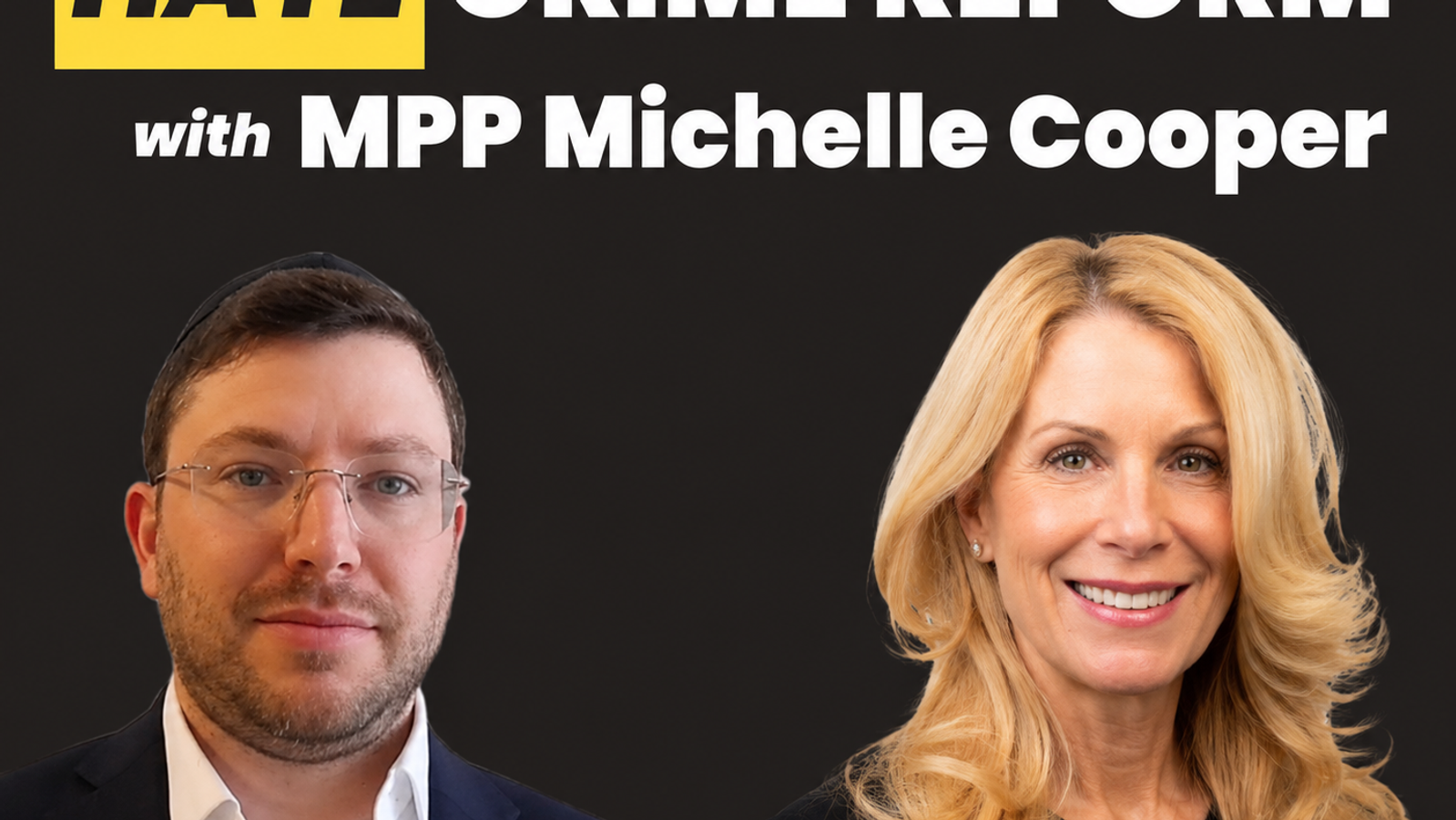


Michelle Cooper may be a relatively new face at Queen’s Park, but her roots in Toronto and in the city’s Jewish community go back generations.
The MPP for Eglinton-Lawrence was born and raised in Toronto, with grandparents who came to Canada from Poland before the war and parents who grew up around the Baycrest area. Politics fascinated her from a young age, eventually leading her to study political science at York University.
Mrs. Cooper’s path from studying politics to practicing it was far from direct. Before entering elected office, she spent more than two decades working across the entrepreneurial, corporate and non-profit sectors. She began her career by founding an internet startup and later held senior leadership roles in sales and marketing.
Immediately before running for office, Mrs. Cooper served as Executive Director of the PC Ontario Fund, supporting fundraising efforts for Premier Doug Ford and the Ontario PC Party.
Mrs. Cooper recently sat down with The Toronto Scoop for a wide-ranging introductory conversation about her background, the influence of her family, her Jewish identity, and her connection to the community she now represents. She spoke about raising her own children with Jewish traditions and values, and why the dramatic rise in antisemitism in recent years has affected her personally.
That concern has also shaped her work at Queen’s Park.
A significant portion of our conversation focused on Mrs. Cooper’s Private Member’s Motion 58, which called on the Ontario government to establish a special prosecution unit for hate crimes. The motion was debated and carried by the Legislature on April 16, 2026.
The province has since established the Hate Crime Prosecutions Unit (HCPU), bringing together dedicated Crown prosecutors with specialized expertise in hate-motivated offences.
Mrs. Cooper says the idea grew out of a simple question she began asking after becoming an MPP: What can the provincial government actually do to move the needle?
Her answer was to focus on an area squarely within Ontario’s jurisdiction: Crown prosecutors. While the Criminal Code is federal and the local police are responsible for investigating alleged crimes, Ontario oversees the Crown prosecutors who ultimately handle those cases in court.
In our conversation, Mrs. Cooper explains how the idea came about, why she believes specialized prosecutors can make a difference, how the new system is being implemented, and why she believes every level of government has its own role to play in confronting hate.
But first, we wanted Toronto Scoop readers to get to know the MPP behind the initiative.
“I Was Born and Raised Here in Toronto”
The Toronto Scoop: Before we get into your private member’s motion, tell our readers a little about yourself. Did you grow up in Toronto?
Michelle Cooper: I was born and raised here in Toronto. I moved to Thornhill when I was a teenager, lived there for many years after I was married, and then moved back to Toronto, to this area, about three years ago.
My parents actually grew up around the Baycrest area. My mother tells me stories about what the neighbourhood was like back then. She always tells me there wasn’t a bus that went north of Lawrence, so she had to walk to Bathurst and Lawrence to get the closest bus going south. There was a lot of farmland here. It was quite different from what it is today.
The Toronto Scoop: Your family was already in Canada before the Holocaust?
Mrs. Cooper: My grandparents came here from Poland before the war, and my parents were born here at Mount Sinai Hospital.
The Toronto Scoop: Mount Sinai has a special place in the history of Toronto’s Jewish community. It was founded by Jewish doctors who couldn’t get jobs in the other hospitals due to antisemitism.
Mrs. Cooper: Absolutely. It’s similar with Baycrest in our neighbourhood. Jewish women raised the money because there wasn’t appropriate long-term care available for seniors with Alzheimer’s and dementia, so they started it themselves.
As a community, we’ve helped build all kinds of institutions in this city.
A Childhood Interest in Politics
The Toronto Scoop: Who were some of the formative influences in your life?
Mrs. Cooper: My father was instrumental. He always spent time with me. I come from a family of three girls — I have two older sisters — and I was very studious. I loved school and learning.
I also loved politics even as a young child. I don’t know exactly what it was that I loved about it, but I just thought it was interesting.
My father would spend time talking with me and helping me with schoolwork. If I had an exam, he’d read over the material and test me on it.
But I’ve also always been my own driving force. My parents encouraged us to be happy in life and pursue whatever brings us passion. At the same time, I’ve always pushed myself. I’ve always wanted to do well and looked at life’s challenges through a positive lens.
The Toronto Scoop: Where did you go to school?
Mrs. Cooper: I went to Newtonbrook Secondary School at Yonge and Steeles, and then York University, where I did my undergraduate degree in political science and communications. I went on to do a master’s degree in political science, specializing in communications policy.
I loved political science and really thrived there. Even when professors didn’t necessarily agree with my side of the political spectrum, I was able to write well, argue my points and do well academically.
Her Connection to Toronto’s Jewish Community
The Toronto Scoop: Tell us about your familiarity with the Jewish community. Was your Jewish identity an important part of your upbringing, or did that become stronger later in life?
Mrs. Cooper: Traditions have always been very important to my family. I’m a very spiritual person, and that connection is important to me.
I sent my children to Associated Hebrew Schools at the Thornhill campus that no longer exists. They attended through about Grade 6 before moving into the public school system.
Instilling Jewish values in my children has always been very important to me. Observing the holidays is important, but the spiritual component and having that connection is even more important to me.
I’m very connected to who I am as a Jewish person and to how my husband and I have raised our children.
“What Can I Do in My Role to Move the Needle?”
The Toronto Scoop: Let’s turn to your private member’s motion. How did this begin?
Mrs. Cooper: As an MPP, you have an opportunity to bring forward a motion. As a new MPP, I knew I wanted to do something in this space because of the rising antisemitism and all of the hate we’re seeing.
I was born here. My parents were born here. My parents experienced antisemitism growing up here, but for me and my generation, I have to say that I didn’t experience what we’re experiencing now. My husband and I talk about this all the time.
So as an MPP, I asked myself: What can I do? What can I do in my role to move the needle?
I did a lot of consultation with advocacy groups, police services, lawyers and people working in this space. I asked people to bring me their ideas.
Last year, I attended a meeting with Attorney General Doug Downey and the Toronto Police Service Hate Crime Unit. It was incredible to see the work they’re doing, and I don’t think that unit gets enough credit.
The Gap Between Police Investigation and Prosecution
The Toronto Scoop: And what did you learn from those consultations?
Mrs. Cooper: One of the issues that was explained to me was what happens when a case moves from the police to a Crown prosecutor.
Police do their work. They investigate, they lay charges, and then the case is handed to the Crown. But hate-crime law is complex.
The Criminal Code is federal, so the province cannot rewrite Canada’s hate-crime laws. But Crown prosecutors fall under the provincial government and the Attorney General. That’s something we have within our provincial “toolbox.”
There is also a fine line between freedom of expression and criminal hate. Having a more senior Crown prosecutor who is specialized in this area means you have someone who understands those complexities.
What we learned was that when specialized Crowns handle these cases, they’re better positioned to take appropriate cases forward, develop stronger case law and pursue successful prosecutions where the evidence supports doing so.
That became the basis of my private member’s motion: calling for a specialized prosecution unit for hate crimes.
Support at Queen’s Park
The Toronto Scoop: What happened once you brought the proposal forward?
Mrs. Cooper: It took a lot of work and a lot of support. Premier Doug Ford was supportive, my caucus was supportive, and Attorney General Doug Downey and his ministry were supportive.
I debated the motion in the House on April 16, and it received support from all parties. That’s really rare. There’s obviously a lot of debate at Queen’s Park, and opposition parties don’t usually support everything the government puts forward. So having that level of support was very unique.
The Legislature’s official record confirms that Motion 58 was debated and carried on April 16.
What Will Actually Change?
The Toronto Scoop: So, is the idea that hate crimes were flourishing because prosecutors didn’t have enough expertise in this particular area?
Mrs. Cooper: I wouldn’t say they were flourishing because of that, because we can’t prevent someone from deciding to commit a crime.
What we can do is hold people accountable when they commit those acts.
Before this change, a Crown could have a stack of all different types of files, and a hate-crime case might simply be one of those files. It could go to a junior prosecutor or someone who isn’t particularly versed in hate-crime law. There wasn’t necessarily a specialist handling that case.
Now we have specialized Crowns prosecuting hate crimes in six regions of the province. These individuals are dedicated to and specialized in this area.
The outcome we’re looking for is greater accountability, more successful prosecutions where appropriate, and stronger case law.
The Ontario government subsequently established the Hate Crime Prosecutions Unit, which it says brings together dedicated Crown prosecutors with focused expertise in hate-motivated offences.
Who Is Responsible for Fighting Hate?
The Toronto Scoop: One of the confusing things for ordinary people is figuring out which level of government is responsible. Is it Ottawa? Queen’s Park? The mayor? Police? Who is actually responsible for addressing this?
Mrs. Cooper: Everybody has their own toolbox.
Everybody owns a piece of this. We can’t just point fingers at one another.
Provincially, we’ve taken action here. Ontario has taken a national leadership role with this initiative. Attorney General Doug Downey has said other provinces have reached out to his ministry asking how they can do something similar.
This is now something that attorneys general from across the country can discuss because Ontario has taken that leadership role.
Not One “Hate-Crime Prosecutor,” But Regional Teams
The Toronto Scoop: Is there one Crown prosecutor in charge — essentially one provincial hate-crime expert?
Mrs. Cooper: No. There are six regions across the province, with different people specializing in this area.
We obviously feel antisemitism very strongly here in Toronto, but hate affects communities throughout Ontario.
My private member’s motion received support from Toronto Police, Peel Regional Police and York Regional Police, as well as from members of the Hindu and Sikh communities.
This isn’t about one person or community. It’s about specialized resources across the province.
The Province’s Broader Approach to Public Safety
The Toronto Scoop: You mentioned that everybody has their own “toolbox.” What has the province been able to do when it comes to bail?
Mrs. Cooper: Bail reform is a federal piece. We talk about this revolving door, and the Premier has really been calling out the federal government around bail reform. People are committing crimes and then they’re let out within 24 or 48 hours, or whatever the timeline is, and they’re back on the streets.
Because we can’t change those laws, we looked at what we can do provincially. The court system and the Crowns are within our toolbox.
One thing we changed involves sureties and cash security deposits. Previously, if bail was set at a certain amount, someone could promise that amount through a surety without necessarily paying the money upfront. Then, if the conditions were breached, the government would have to go after the money.
We’ve changed the system so that when a full cash security deposit is required, that money has to be paid upfront before the person can leave. If they abide by all of their conditions, they get that money back. We’ve reversed it.
The Toronto Scoop: Hopefully these measures will help. I guess one concern is that organized crime has essentially unlimited funds, so they can bail people out pretty quickly — especially if the amount is nominal.
Mrs. Cooper: We have to look at everything we can do provincially. We are working on trying to keep people safe and feeling safe. Public safety is very important to us and our government.
That’s also why, when I came forward with this initiative around hate crime and creating specialized and dedicated Crown prosecutors, it was something we could do provincially, within our toolbox.
But municipally and federally, they also need to enact what they can do to help combat what is going on here.
“I’m Working Hard for This Community”
The Toronto Scoop: Thank you for taking the time to speak with us. We hope you’ll keep an open line of communication with The Toronto Scoop and our community.
Mrs. Cooper: Absolutely. Thank you for having me. I’m working hard for this community, for the people of Eglinton-Lawrence, and for the people of Ontario.
Editor’s Note: This Q&A is not a verbatim transcript of The Toronto Scoop’s interview with MPP Michelle Cooper. The conversation has been lightly edited and condensed for clarity and ease of reading, while preserving the substance of the discussion.