





On This Day in Jewish History: 24 Elul - the Second Temple - 351 Bce
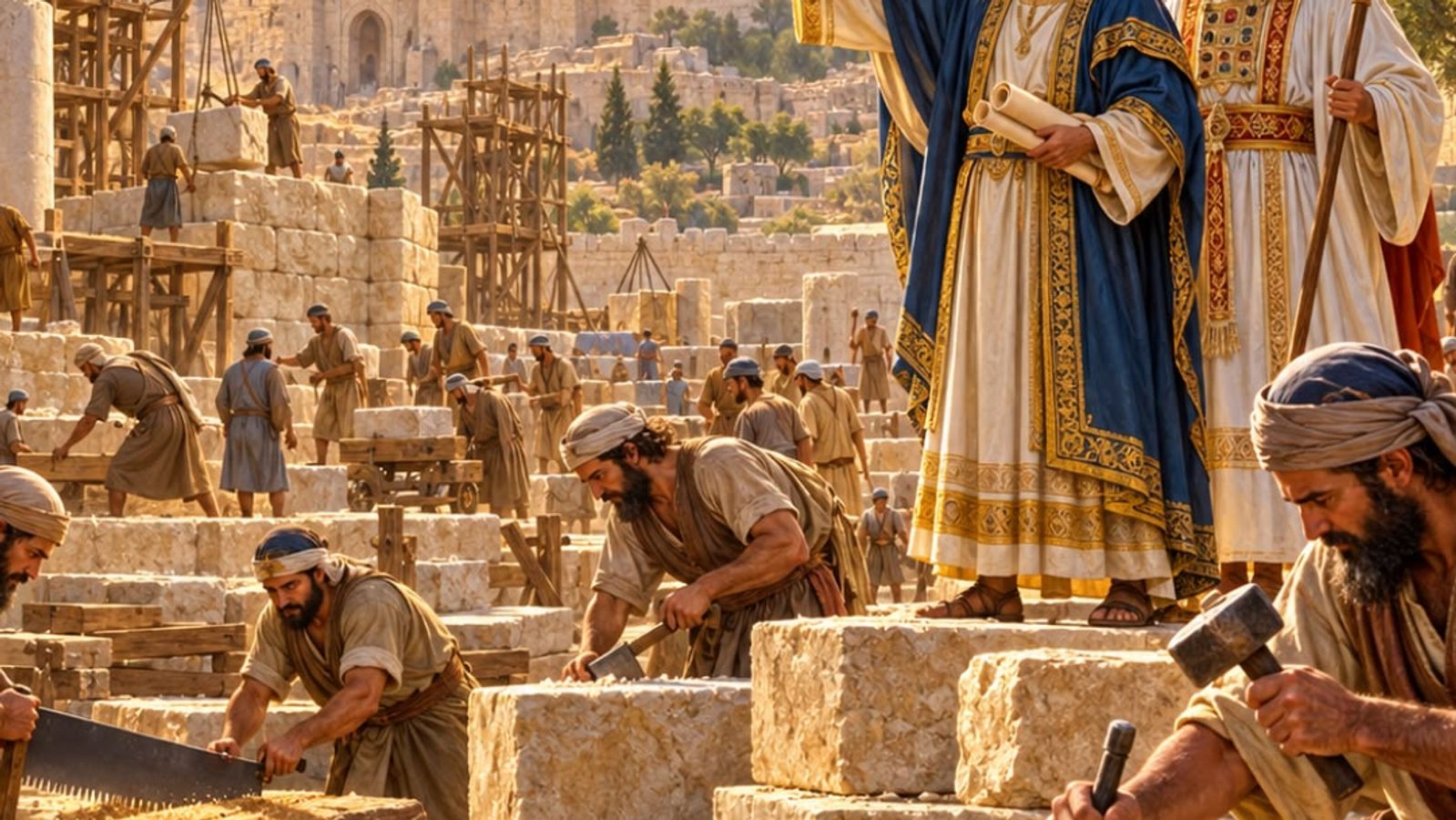


On this day in 351 BCE, the building of the Second Beis HaMikdash began. The prophet Chaggai records that Hashem roused the spirit of Zerubavel ben Shealtiel, the governor of Judah, and of Yehoshua ben Yehotzadak, the Kohen Gadol, and of all the remnant of the people, and they came and did work in the House of Hashem. The verse that follows fixes the day precisely: the twenty-fourth of the sixth month, in the second year of King Darius. Rashi explains what the work consisted of that day. They began cutting stones and sawing trees.
The two men who led it carried the whole weight of Jewish continuity between them. Zerubavel was a grandson of King Yehoyachin, exiled to Babylon as a young man, and so a direct descendant of David and the heir apparent to the throne of Judah should the monarchy ever be restored. Yehoshua ben Yehotzadak was the grandson of Serayah, the last Kohen Gadol to serve before the destruction, and he would be the first to serve in the new House. Kingship and priesthood, both severed by the destruction, stood together again on the ruined mountain. Nor was this the first attempt. Nearly two decades earlier, under Cyrus, the returnees had rebuilt the altar and laid the foundation. Ezra describes the scene: the young men shouted with joy while the old men who remembered the First Temple wept aloud, and no one could distinguish the sound of the weeping from the sound of the joy. Then the enemies of Judah and Binyamin hired counselors against them, and the work stopped for eighteen years.
What broke the paralysis was not a decree but a rebuke. Chaggai asked the people whether it was fitting for them to dwell in their paneled houses while the House of Hashem lay in ruins, and they heard him. Only after the building had resumed did the Persian governor demand an explanation, prompting a search of the royal archives that turned up Cyrus's original decree, and Darius then confirmed it and ordered the work paid for out of imperial revenue. The Jews began building without permission, and the permission followed.