





On This Day in Jewish History: 29 Elul - Warsaw Ghetto Deportation - 1942
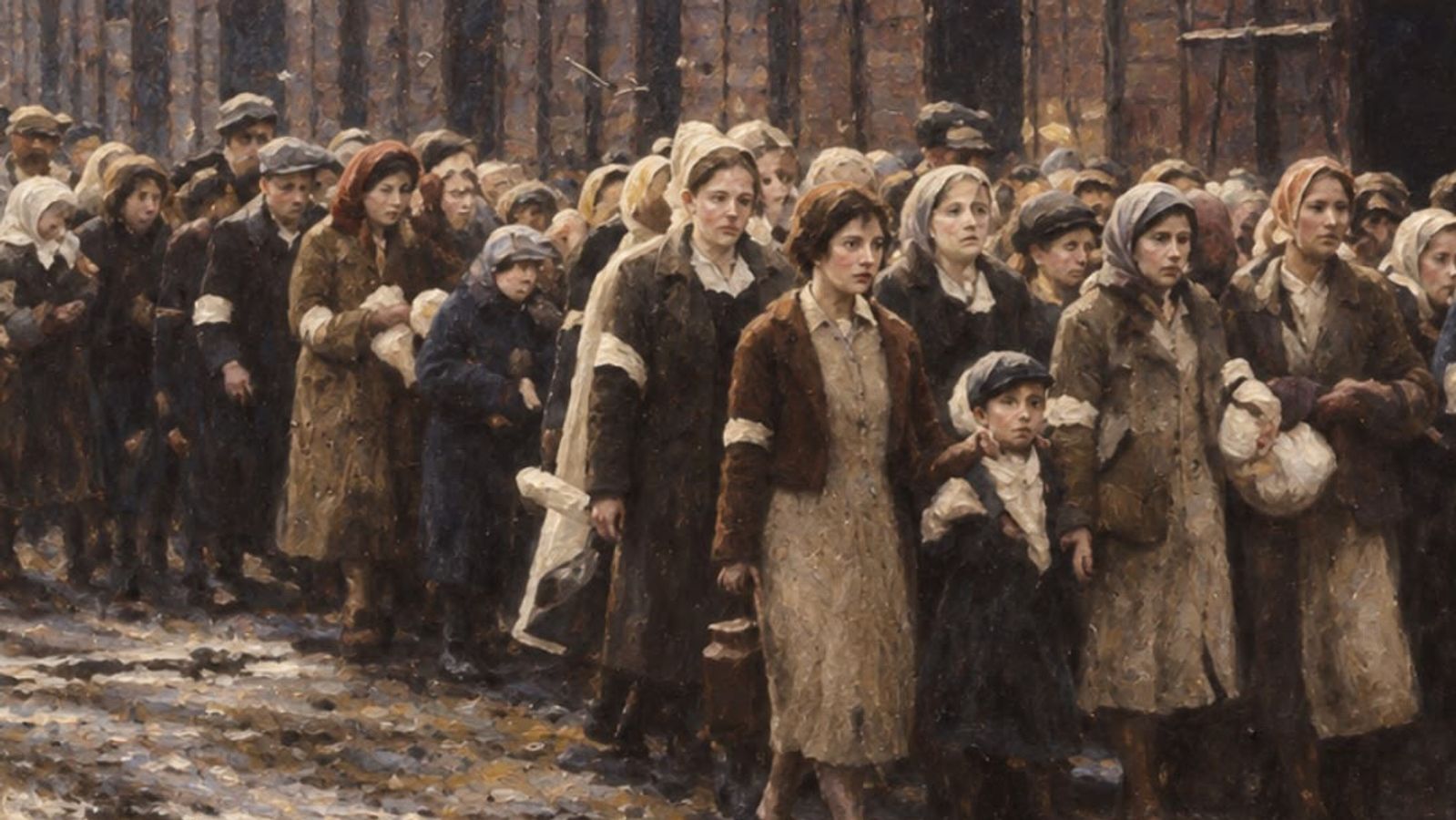


On this day in 1942, the mass deportation of the Warsaw Ghetto reached its climax. The ghetto had been sealed in November 1940, when the Germans walled off roughly four hundred thousand Jews, a third of the population of Warsaw, into an area covering barely two percent of the city. Families lived seven and eight to a room. The wall ran ten feet high, topped with broken glass. Official rations came to under two hundred calories a day, a fraction of what a human being needs to survive, and everything else had to be smuggled in, much of it by children small enough to slip through gaps in the masonry and quick enough to outrun the guards. Before a single transport left for Treblinka, some eighty thousand people had already died inside the walls of hunger and disease.
The Jews of the ghetto did not merely endure. They ran clandestine schools, underground libraries, orchestras, and yeshivos. The historian Emanuel Ringelblum organized a secret archive under the code name Oneg Shabbos, gathering diaries, ration cards, posters, and testimony so that the world would one day know exactly what had been done and by whom. When the deportations began, the archive was packed into milk cans and metal boxes and buried beneath the ghetto. Two of the three caches were recovered from the rubble after the war. Ringelblum himself was murdered in 1944.
The Great Deportation began in July of 1942 and ran through the summer. Adam Czerniakow, head of the Judenrat, took his own life the day after he was ordered to supply the daily quotas of Jews for the trains. Through August and into September the transports ran, day after day, from the Umschlagplatz to Treblinka. In the second week of September the Germans herded the remaining population into a few blocks and conducted a final selection, and the deportation reached its peak, with some ninety thousand seized in that closing phase alone. It ended on Yom Kippur. Roughly two hundred sixty-five thousand Jews of Warsaw had been sent to the gas chambers in two months. Those who remained began building bunkers and acquiring weapons, preparing for what we now know as the Warsaw Ghetto Uprising.