





On This Day in Toronto Jewish History: the Christie Pits Riot
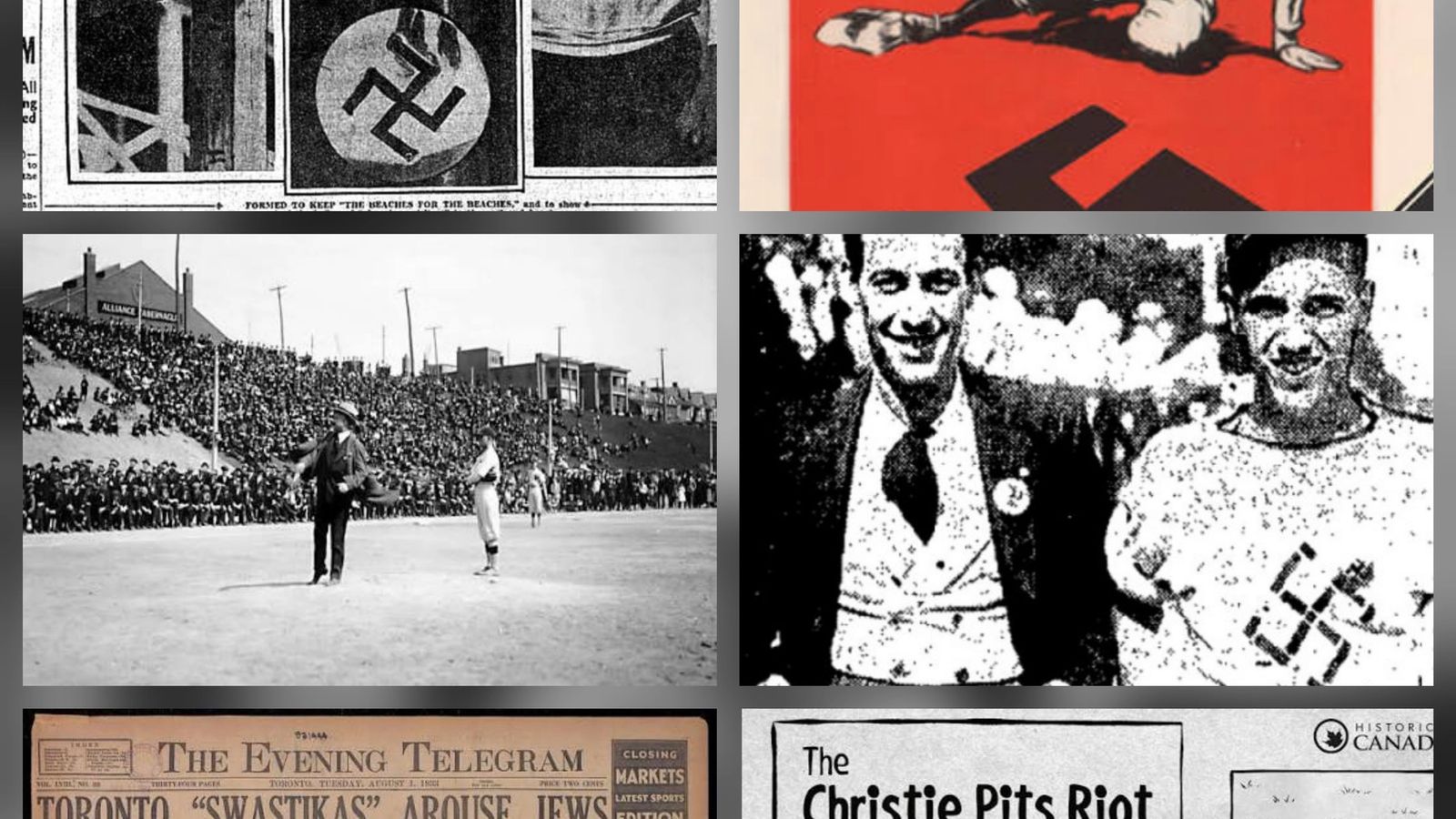
On the night of August 16, 1933, Toronto was shaken by one of the worst outbreaks of ethnic violence in its history — the infamous Christie Pits Riot.
The riot took place at Christie Pits, then officially known as Willowvale Park, against the backdrop of the Great Depression and widespread antisemitism. Toronto’s Jewish community faced discrimination in employment, housing and recreation, with Jews excluded from numerous clubs, beaches and recreational facilities.
Meanwhile, Adolf Hitler had come to power in Germany just months earlier, and the swastika was beginning to appear on Toronto’s streets. So-called “Swastika Clubs” had emerged among some local youths, including groups seeking to drive Jews and other “foreigners” out of public spaces.
THE IMMEDIATE FLASHPOINT WAS A SOFTBALL GAME
A playoff series was underway between Harbord Playground, whose players and supporters were largely Jewish, and St. Peter’s, associated largely with Toronto’s Irish Catholic community.
During the first game of the series on August 14, supporters displayed a swastika and shouted antisemitic taunts. By the following day, a large swastika and the words “Hail Hitler” had been painted on the Christie Pits clubhouse.
There were warnings that the next game could turn violent — but only a minimal police presence was initially assigned to the park.
THEN CAME THE SPARK
After St. Peter’s defeated Harbord on August 16, two young men unfurled a large blanket emblazoned with a black swastika.
Jewish youths rushed toward them and attempted to seize the banner.
A fight exploded.
Word spread rapidly through the surrounding neighbourhoods, bringing reinforcements from both sides to Christie Pits.
But the battle was not simply Irish Catholics versus Jews.
Many local Italian youths came to the aid of the Jews.
Toronto’s Italian community was itself an immigrant minority that faced considerable prejudice and discrimination, with a large Italian population living in the nearby College Street neighbourhood.
Contemporary accounts describe Jewish reinforcements arriving by car and truck — joined by Italians who came to fight alongside them.
SIX HOURS OF VIOLENCE
What began as a confrontation over a swastika at a softball diamond became a massive street battle.
The fighting raged for roughly six hours, from around 7:30 p.m. until approximately 1:30 a.m., spilling from Christie Pits into the surrounding streets and laneways.
A crowd of more than 10,000 participants and spectators gathered as hundreds battled with fists, baseball bats, clubs, pipes and iron bars.
Scores of people were injured, some seriously enough to require hospital treatment. The true number is unknown, as many of those injured apparently never sought medical attention.
Remarkably, despite the scale and brutality of the fighting, no one was killed.
The violence shocked a city that liked to think of itself as orderly “Toronto the Good.” Mayor William James Stewart publicly questioned why police had not responded more effectively despite advance warnings and declared that public displays of the swastika could lead to prosecution.
A DARK CHAPTER IN TORONTO HISTORY
Christie Pits would become a lasting symbol of a darker chapter in Toronto’s history — a time when antisemitism and ethnic hostility could erupt into violence on the streets of the city.
The fact that many Italian youths joined their Jewish neighbours is another remarkable part of the story, reflecting the complicated alliances among Toronto’s immigrant communities during an era when both groups frequently faced discrimination.
Today, a plaque at Christie Pits commemorates the riot and its place in Toronto history.
93 years ago today, on August 16, 1933, Toronto’s simmering ethnic and religious tensions erupted into the streets — and a softball game became the setting for one of the most infamous confrontations in Canadian Jewish history.
Christie Pits, Toronto August 16, 1933